Cenote Zací Valladolid: Entry Fee, Cliff Jumps & Visit Guide (2026)
Your comprehensive insider manual: updated 2026 ticket prices (150 MXN), the dining fee waiver secret, 8-meter cliff jumping ledges, cave photography windows, and safety rules.
Top-Rated Cenote Swimming Tours from Valladolid
Discover the most breathtaking subterranean sinkholes across eastern Yucatán with roundtrip transport and local guides.
 Bestseller
 Top Value
 Bestseller
The Urban Wonder: A Colossal Subterranean Sinkhole Inside the City Grid
Among the thousands of natural sinkholes scattered across the limestone karst plains of the Yucatán Peninsula, Cenote Zací occupies a completely unique status: it is situated right in the municipal heart of an active colonial city. Located on Calle 36 between Calle 37 and Calle 39, this colossal open-air chasm lies just seven blocks east of Valladolid’s main square (Parque Principal Francisco Cantón Rosado)—an effortless 7-minute stroll from the city’s finest cafes and hotels.
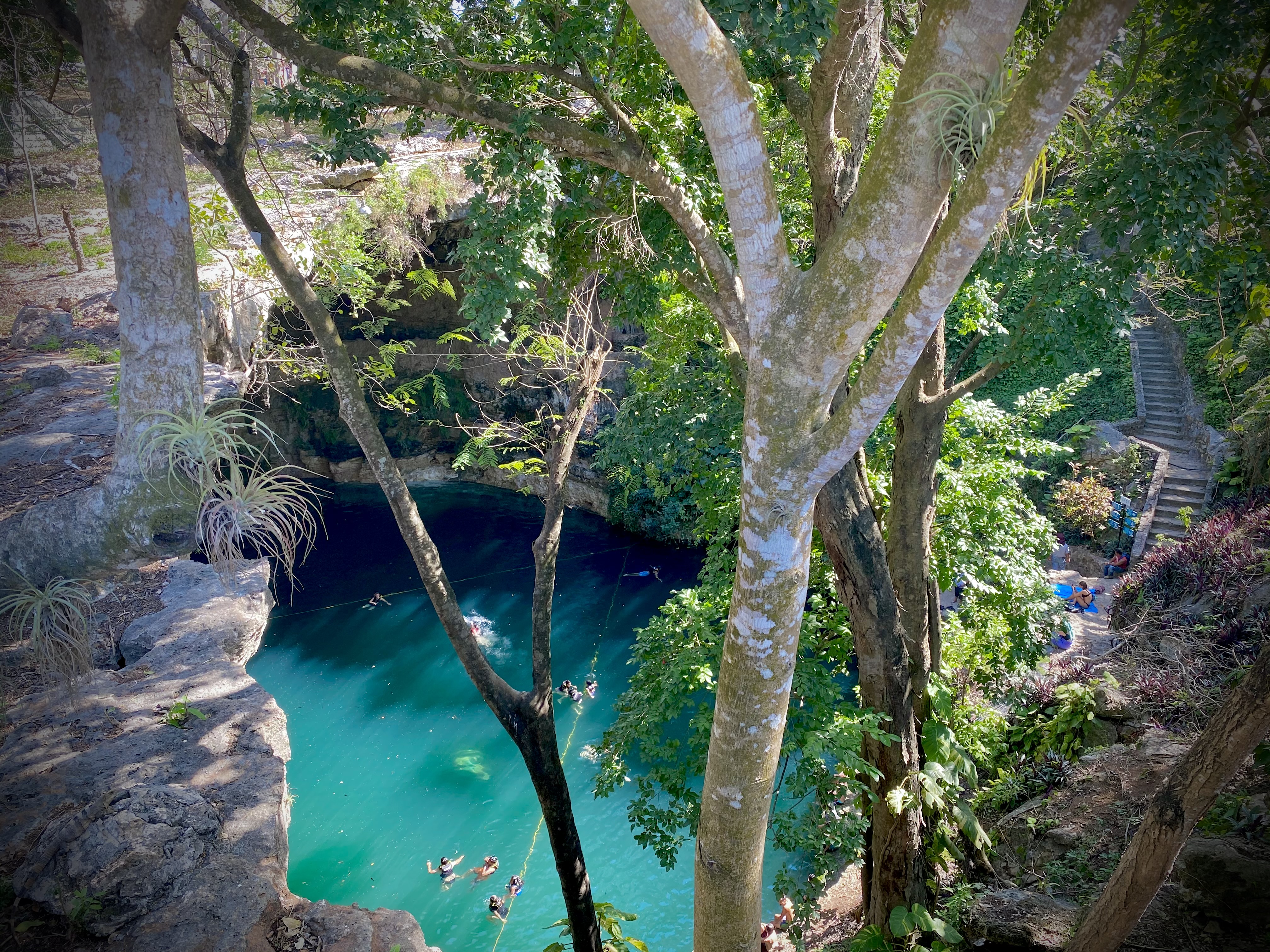
You can walk out of a charming coffee shop on the zócalo, pass a row of pastel colonial townhouses, pay a modest entry fee at a municipal turnstile, and descend stone steps directly into a roaring subterranean amphitheater where prehistoric limestone stalactites hang 30 meters above deep, shimmering turquoise water. For centuries, this sacred geological formation sustained the pre-Columbian Mayan city of Saki' (from which modern Valladolid takes its cultural soul). Today, Cenote Zací represents one of the most accessible, thrilling, and visually stunning swimming holes in Mexico. Below is the definitive operational handbook for your visit in 2026.
Cenote Zací: Fast Facts & Operational Matrix (2026)
| Metric / Parameter | Verified Operational Baseline | Key Notes & Traveler Guidance |
|---|---|---|
| Exact Location | Calle 36 por 37 y 39, Centro, 97780 Valladolid | 7-block walk east of Parque Principal (no taxi needed) |
| 2026 Entry Fee (Adults) | 150 MXN (~$8.00 USD) | Cash only in Mexican Pesos (includes mandatory life jacket) |
| 2026 Entry Fee (Children) | 75 MXN (~$4.00 USD) | Ages 4 to 12; toddlers under 3 enter free |
| Restaurant Waiver Hack | Spend 100 to 200 MXN at on-site restaurant | Waives the cenote ticket completely (eat lunch, swim free!) |
| Opening Hours | Daily: 9:00 AM – 5:30 PM | Last admission ticket sold at 4:00 PM |
| Geological Sinkhole Type | Semi-Open Cavern (Semi-Abierto) | Massive limestone half-dome overhang with exposed sky |
| Water Diameter & Depths | 28m diameter; 25m to 80+m deep | Extreme depth; certified life jackets strictly required |
| Cliff Jumping Heights | 2 meters, 5 meters, and 8 meters | Official carved stone ledges; on-site lifeguard surveillance |
| Aquatic Fauna | Black Mayan catfish (bagres) | Harmless, endemic, swim near surface ledges |
Clarifying the Entry Fee: The "30 MXN Myth" vs. 2026 Reality
If you have read older guidebooks published before 2023 or browse dated forum threads on Reddit and TripAdvisor, you will repeatedly encounter bloggers claiming Cenote Zací costs a trivial 30 MXN (~$1.50 USD). This information is completely outdated.
Between 2022 and late 2023, the municipal government of Valladolid closed Cenote Zací for extensive multimillion-peso safety overhauls. The municipal engineering team reinforced the descending stone staircases, erected protective stainless-steel safety railings, upgraded the stone cliff-jumping platforms, installed modern changing pavilions and outdoor rinse showers, and built an expansive regional restaurant overlooking the water. Following this major modernization, the official municipal tariff was established at 150 MXN (~$8.00 USD) for adult foreign visitors. Crucially, this updated fee now includes the mandatory rental of an official USCG-approved life jacket, which was previously billed as an extra add-on.
The Restaurant Hack: How to Swim for Free with Lunch
One of the best-kept insider secrets in Valladolid travel is the official partnership between the municipal cenote and its on-site dining establishment, El Restaurante Cenote Zací. The restaurant features a spacious open-air dining terrace elevated directly over the rim of the sinkhole, offering breathtaking panoramic views of swimmers leaping from the cliffs below.
How the Dining Waiver Works Step-by-Step
- Upon arriving at the complex gate on Calle 36, inform the attendant that you wish to dine at the restaurant first.
- Ascend the terrace stairs and take a table overlooking the water.
- Order traditional Yucatecan specialties from the menu. Authentic dishes include Lomitos de Valladolid (tender pork loin braised in rich tomato, garlic, and hard-boiled egg gravy), Longaniza Asada (local smoked Valladolid pork sausage served with sour orange and pickled red onions), or Poc Chuc (citrus-marinated grilled pork steak).
- If your dining bill reaches a minimum of 100 to 200 MXN per person (which an entree and a fresh fruit beverage easily fulfills), ask your waiter to stamp your itemized bill.
- Present your stamped receipt at the lower swimming turnstile, and the staff will grant you 100% complimentary entry to the cenote, including your sanitized life jacket! You enjoy a world-class local meal and swim in the cenote without paying a single peso for an admission ticket.
Geological Marvel: Semi-Open Cavern Half-Dome & 80-Meter Depths
From a speleological perspective, Cenote Zací is classified as a semi-open sinkhole (cenote semi-abierto). Millions of years ago, following the Chicxulub asteroid impact that fractured the limestone bedrock of the northern Yucatán platform, underground acidic rainwater hollowed out an immense subterranean cavern. Eventually, approximately one-third of the structural limestone ceiling collapsed inward, exposing the crystal-clear groundwater beneath to the open sky while leaving the remaining two-thirds sheltered under a monumental stone cavern roof.
The visual contrast is breathtaking. Huge calcified stalactites hang down from the cave ceiling, dripping mineral-rich water onto the surface below. Thick curtains of wild aerial tree roots plunge 25 meters from the surface soil above, draping over the rock faces like living jungle ropes. Swallows (golondrinas) and fruit bats roost in the high cave crevices, swooping across the chasm throughout the day.
Beneath the surface lies an aquatic abyss. While the water along the stone perimeter ledges sits at 25 to 30 meters (80 to 100 feet), the submerged cavern floor descends down vertical underwater trenches exceeding 80 meters (262 feet) in depth. Swimming through the water, you will regularly encounter schools of bagres—endemic black Mayan catfish that grow up to 30 cm long. These gentle, whiskered fish are harmless and accustomed to swimmers, often drifting alongside you as you glide across the jade-colored basin.
Cliff Jumping at Cenote Zací: Ledges, Heights & Safety Form
For adventure travelers and thrill-seekers, Cenote Zací is widely recognized as the premier cliff-jumping cenote in eastern Yucatán. Unlike many privately owned cenotes where jumping is strictly prohibited due to insurance liability, Cenote Zací was deliberately engineered with carved stone platforms and monitored jumping zones.
The Three Official Jumping Heights
- The Lower Platform (~2 Meters / 6.5 Feet): Perfect for children, beginners, and anyone wanting a gentle plunge into the water. Located just above the main entry stairs on the eastern rock face.
- The Mid-Tier Ledge (~5 Meters / 16.4 Feet): Positioned along the ascending stone staircase wrapping around the open northern rim. This height offers a solid adrenaline rush with an easy, stable takeoff point and zero obstruction below.
- The Upper Cliff (~8 Meters / 26.2 Feet): The ultimate leap for experienced cliff jumpers. Located along the high upper trail carved into the natural limestone overhang. The drop offers several seconds of freefall into the deep abyss below.
Mandatory Cliff Jumping Safety Protocols
- Clear the Landing Zone: Always look down and shout "¡Pista!" or verify that the landing area is 100% free of swimmers and passing catfish before leaping.
- Pencil Dive Form: Always jump feet-first with your body locked in a rigid vertical "pencil" posture. Keep your arms crossed tightly across your chest, toes pointed downward, and legs clamped together. Never attempt belly flops, cannonballs, or head-first diving from the 5m or 8m ledges; striking deep water at 35 km/h will cause severe bruising or disorientation.
- Listen to the Lifeguards: Certified municipal lifeguards are stationed along the perimeter with throw rings and whistles. If a lifeguard signals that the jumping zone is temporarily closed due to maintenance or boat cleaning, follow instructions immediately.
Optimal Visiting Hours & Photography Windows
To capture National Geographic-caliber photography and avoid fighting for swimming space, timing your arrival is essential:
- The Morning Solitude Window (9:00 AM – 10:30 AM): This is the golden hour for tranquility. The morning air is crisp, the water surface is as smooth as glass, and you will share the entire amphitheater with perhaps 3 or 4 other swimmers. The natural silence inside the cavern dome is deeply meditative.
- The Sunbeam Photography Window (11:30 AM – 1:30 PM): When the midday sun reaches its apex directly above the collapsed ceiling, intense shafts of golden sunlight pierce through the jungle foliage and plunge deep into the turquoise water, illuminating the underwater rock shelves in brilliant emerald hues. This is the optimal window for wide-angle camera shots and drone-like perspectives from the upper rim.
- The Afternoon Rush (2:00 PM – 4:00 PM): Between 2:00 PM and 4:00 PM, regional excursion shuttles and domestic day-trippers often arrive after visiting Chichén Itzá. The cenote becomes loud and lively with splashes and laughter.
- Seasonal Water Clarity Shifts: During the dry season (November through April), runoff is minimal, granting extraordinary underwater visibility up to 15 meters. During the rainy season (June through October), heavy tropical thunderstorms wash organic jungle silt into the semi-open basin. The water temporarily turns a milky jade or opaque olive-green; swimming remains 100% safe and refreshing, but underwater photography clarity is reduced.
Essential Eco Rules & Packing Checklist
The Yucatán cenote ring is fed by the largest interconnected subterranean aquifer system on Earth. Because limestone is porous, contaminants directly poison the municipal drinking water supply and kill fragile endemic cave species. Every visitor must observe strict conservation rules:
- Mandatory Pre-Swim Shower: You must take a vigorous freshwater shower at the open-air rinse stations before stepping onto the cenote steps. This removes body lotions, deodorants, perfumes, and sweat.
- Strict Chemical Sunscreen Ban: Traditional oxybenzone and octinoxate sunscreens are strictly illegal across all Yucatecan cenotes. Even products labeled "biodegradable" leave harmful oil films on stagnant cave waters. To protect yourself from sunburn on the open rim, wear a UPF 50+ long-sleeve rashguard.
- Footwear: Wear Sturdy Water Shoes: The winding stone staircases and carved tunnels descending into Cenote Zací are perpetually damp and slick with algae. Walking barefoot or in flat flip-flops is a major slipping hazard. Sturdy neoprene water shoes with rubber-tread soles provide superior traction on wet limestone.
- Lockers & Changing Facilities: Modern changing stalls and secure lockers are available near the entrance for a fee of 30 to 50 MXN. Bring your own small padlock or leave valuable electronics in your hotel room safe.
The Tragic Mayan Legend of Saki'-Nicté and Hul-Kin
Beyond its physical grandeur, Cenote Zací carries profound mythical significance for the indigenous Maya. Ancient lore tells of the beautiful maiden Zací-Nicté (meaning "White Flower"), granddaughter of the ruling cacique of the ancient city of Saki'. She fell deeply in love with Hul-Kin ("Sunbeam"), the young warrior son of a rival chieftain from a neighboring province.
Fearing tribal war, their families forbade the union and dispatched Hul-Kin to conquer a distant domain, where he was pressured into betrothal to a princess. Stricken with inconsolable grief and refusing to wed another, Zací-Nicté walked to the edge of the limestone precipice beneath the full moon. Clasping a heavy stone tied with a sacred quetzal feather to her chest, she threw herself into the black water. Months later, upon returning to discover her fate, the grief-stricken Hul-Kin dove into the same dark chasm to join her in Xibalba (the underworld). To this day, local elders whisper that when the water of Cenote Zací turns a deep, dark jade hue before summer rains, it is the spirit of the young lovers stirring the depths.
Red Flags & Practical Safety Warnings
- Slick Stone Staircases: The perimeter path wraps entirely around the sinkhole, featuring a damp stone tunnel cut directly through the rock. The handrails can be wet; hold onto cables firmly and watch your step. Never run along the wet ledges.
- Last Entry Deadline: Although the complex closes at 5:30 PM, the ticket turnstile halts ticket sales at 4:00 PM sharp. If you arrive at 4:15 PM, staff will deny entry. Plan your day accordingly.
- Alcohol and Swimming: If you consume artisanal craft beer or tequila at the on-site restaurant, staff and lifeguards will strictly prohibit you from jumping from the 5m and 8m cliff platforms. Keep swimming and drinking strictly separated.
- Unsupervised Children: Because the water has zero shallow wading beach and drops immediately into deep water, children must wear properly fitted life vests at all times, even when sitting along the water-level stone steps.
Frequently Asked Questions: Cenote Zací
How much does Cenote Zací cost in 2026?
Admission is 150 MXN (~$8.00 USD) for adults and 75 MXN (~$4.00 USD) for children. Payment is strictly cash only in Mexican Pesos. The entry ticket includes mandatory life jacket rental.
Can you visit Cenote Zací just to take photos without swimming?
Yes. If you simply want to admire the colossal cavern, stroll the perimeter pathway, or take photographs from the upper viewpoints, you still pay standard general admission (or dine at the restaurant). You are under no obligation to enter the water.
Is swimming in Cenote Zací safe for non-swimmers?
Yes, provided you wear the included life jacket properly buckled around your waist and chest. Because the life jackets provide 100% positive buoyancy, non-swimmers can float effortlessly and safely across the basin under the supervision of on-duty lifeguards.
Can I combine Cenote Zací with other cenotes in one day?
Absolutely. Because Cenote Zací is located right in downtown Valladolid, you can visit Zací in the morning, rent a bicycle to ride 4.5 km south to Cenote Hacienda Oxman in the early afternoon, and take a 50 MXN colectivo to Cenote Samulá and Xkékén in Dzitnup before sunset.
Editorial Note from Mateo Valero
"Whenever I have an open morning in Valladolid, I walk seven blocks down Calle 39, step past the gates of Cenote Zací right at 9:00 AM, and take a flying leap from the 5-meter stone ledge into that deep, cool water. Floating on your back beneath that ancient stone ceiling while the morning sun begins to filter through the stalactites is pure magic. And remember: order the lomitos de Valladolid at the restaurant upstairs—it's one of the tastiest meals in town and makes your swim completely free!"
Read Author Principles & Methodology →